Foundation Repair Cost in Little Rock, AR (2026)
If you own a home in Little Rock, AR and have spotted a crack or a door that drags, the money question usually comes up early. This guide sets out six published cost ranges, names where each one comes from, and explains what pushes a job higher or lower for houses across Pulaski County.
- No Cost to Request
- Permit and License Basics
- Local to Pulaski County & Nearby
- Slab & Pier-and-Beam Homes
Not sure if we cover your area? Check now ↓
Typical Costs by Repair Type
Start with the plain limit of this table: nobody publishes a foundation cost figure for Little Rock, AR or for Arkansas as a whole, so none is used here. Every row was taken from a national home-cost website, and the source and year sit beside it. None is our price, quote or bid; each is a planning range.
| Cost row | Figure | Source (year) |
|---|---|---|
| Typical foundation repair, national | about $2,224 to $8,134 (average about $5,179) | This Old House (2026) |
| Piers, per pier | about $1,000 to $3,000 | This Old House (2026) |
| Pier and beam repair | about $2,000 to $15,000 or more | HomeGuide (2026) |
| Crack repair, per crack | about $250 to $800 | This Old House (2026) |
| Slab lifting (mudjacking) | about $550 to $1,300 | This Old House (2026) |
| Structural engineer's report | about $500 to $1,000 | This Old House (2026) |
Check what each row counts. Piers and cracks are priced one at a time; the typical repair, pier and beam and slab lifting rows each describe a whole job; the engineer's row buys a written evaluation, not a repair. HomeGuide (2026) also puts house leveling at about $1,000 to $3,500 when shims do the work and about $10,000 to $20,000 for extensive underpinning.
For scale, the Census Bureau's QuickFacts gives $236,400 as the median value of owner-occupied homes in Little Rock, AR. Most rows above, and most typical jobs, reach past $2,000 at the top end. In Arkansas that matters: the Arkansas Contractors Licensing Board must license whoever takes on home-improvement work, repairs among it, on an existing house once the job costs more than $2,000, and breaking one job into smaller contracts doesn't change that.
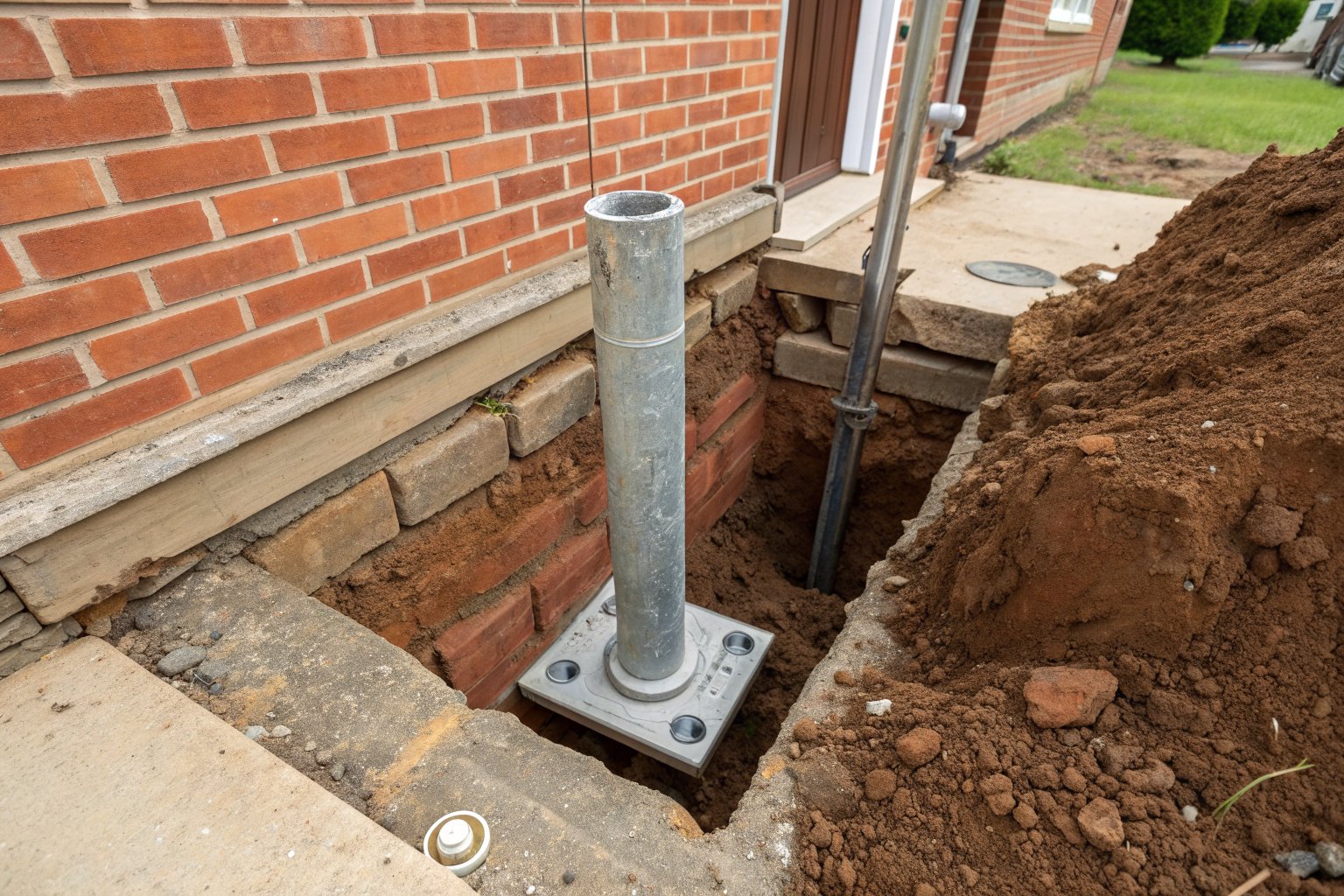
Pier Count, Depth and Access
The specialist prices what the inspection turns up; these pieces tend to move the number most.
- Number and depth of piers. Each pier adds to the bill, and piers driven or pressed deeper to reach firmer ground take more time and material. Three piers under one corner and a full line along two walls are very different jobs.
- Room to work. Digging along a slab's edge, or working in a tight space under a raised floor, sets much of the labor, and patios or plantings against the walls can add steps.
- Shims, beams and joists. If your home sits on piers and beams, the plan may lean on shims, new interior piers or beam repair instead of outside piers, and each carries its own price.
- Plumbing repairs. If a leak turns up, the line work belongs to a plumber licensed by the Arkansas Department of Health and is billed apart. Ask who would handle any plumbing or drain-piping piece.
- Drainage work. Gutters, downspout extensions or regrading may join a plan so rainwater runs away from the walls, each on its own line.
- The permit. For a home within the city limits of Little Rock, AR, a job over $5,000 (labor and materials together) or one needing an inspection falls under the City's permit rule, and foundation repair isn't on its exception list. Ask whether pulling the permit is part of the price.
- An engineer's report. National figures from This Old House (2026) put it near $500 to $1,000, usually listed on a line by itself.
A Little Rock, AR mailing address doesn't always put a home under City rules: since August 5, 2025, the City says its authority stops at the city limits. Beyond them, ask which office handles your address.
Spotting Gaps in a Foundation Quote
Whatever the specialist writes after seeing the house is the only figure that counts for it. Look for each item below, and ask about any that is missing.
- The scope. What gets repaired, along which walls or under which rooms, and what is left alone.
- Piers, spelled out. How many, what type, how deep they go and where each one sits, ideally marked on a sketch of the house.
- The permit. Whether the job needs one and who will pull it.
- An engineer's report, if any. Whether the plan includes one, and who arranges and pays for it.
- The license number and name. The contractor's state license number, and a business name that matches the name the license is under on the Board's online contractor search. The same number should appear on the job-site sign.
- Warranty terms on paper. What the warranty includes, how many years it runs and whether a buyer inherits it if you sell.
- Payments and dates. What is due at signing, partway through and at the end, plus the start and finish dates.
Sign a written contract, and sign a change order before any extra work is added. If a salesperson signed you up at your home, Arkansas law gives you a short window to cancel (Sundays and holidays don't count), with an exception for emergency repairs; the details sit on the foundation repair rules in Arkansas page. Treat that as general information rather than legal advice.
How Much an Engineer's Evaluation Costs
A structural engineer's report comes to about $500 to $1,000 on This Old House's national figures (2026). It pays for an evaluation and a written finding, not a repair, and the calculator below adds it when you answer Yes or Not sure.
We can't tell you whether your job will call for one, so put two questions to the people who can. Ask the specialist if a licensed professional engineer will walk through the house and approve the plan in writing. For a home inside city limits, then ask the City's Building Permit Desk (501-371-4832) whether your permit needs engineered drawings; elsewhere, ask your own city's office. You can also hire a structural engineer yourself, and that engineer then works for you alone.
Request a Written Foundation Estimate
The calculator above turns four answers into a rough pier range from the national rows. It places roughly one pier for every 8 feet of affected wall. That spacing is only the tool's working assumption, not a rule; the real count is the specialist's to set. On a home with piers and beams, the work may be shims, interior piers or beam repair rather than outside piers, so check the Pier and beam repair row as well.
For a figure that fits your own house, use the request form, which costs you nothing to send. Foundation Repair Little Rock AR reads what you write and sends it to one independent local foundation specialist, who gets in touch about a possible visit. After inspecting, the specialist writes an estimate only if there is work worth doing. Ask whether the visit or estimate carries a charge. Any next step is your call.